Driver’s Ed Approach to Technology
Ultimately, before your child flees the nest, you want them to be an independent, safe smartphone user who knows how to navigate the digital world in a healthy, responsible way.
But a smartphone is a lot like a car. It’s powerful and useful, but it requires maturity, training, and gradual responsibility. We don’t hand a child car keys and send them onto the highway on day one. Instead, we teach, practice, and build skills over time – starting when they are riding in the back seat.
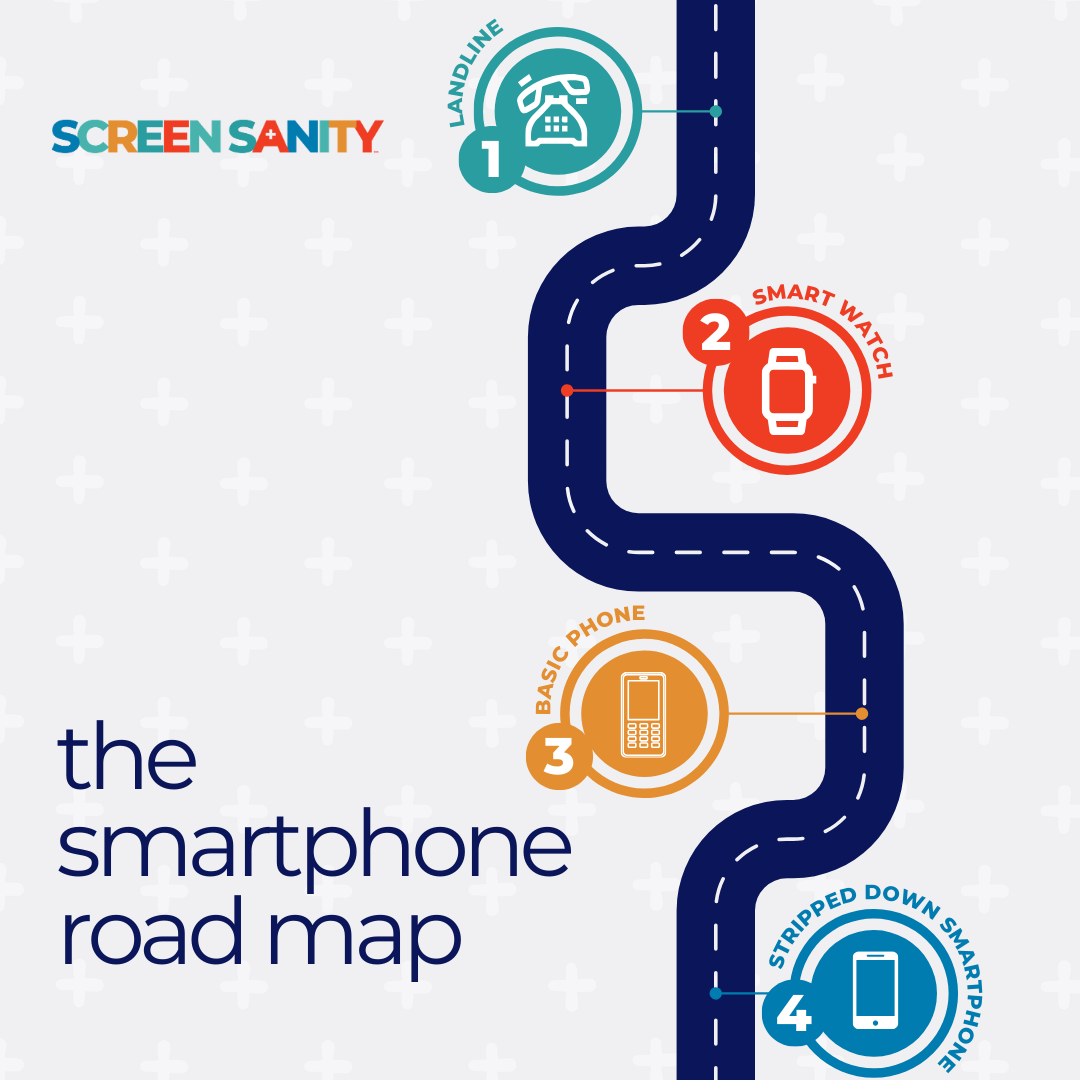
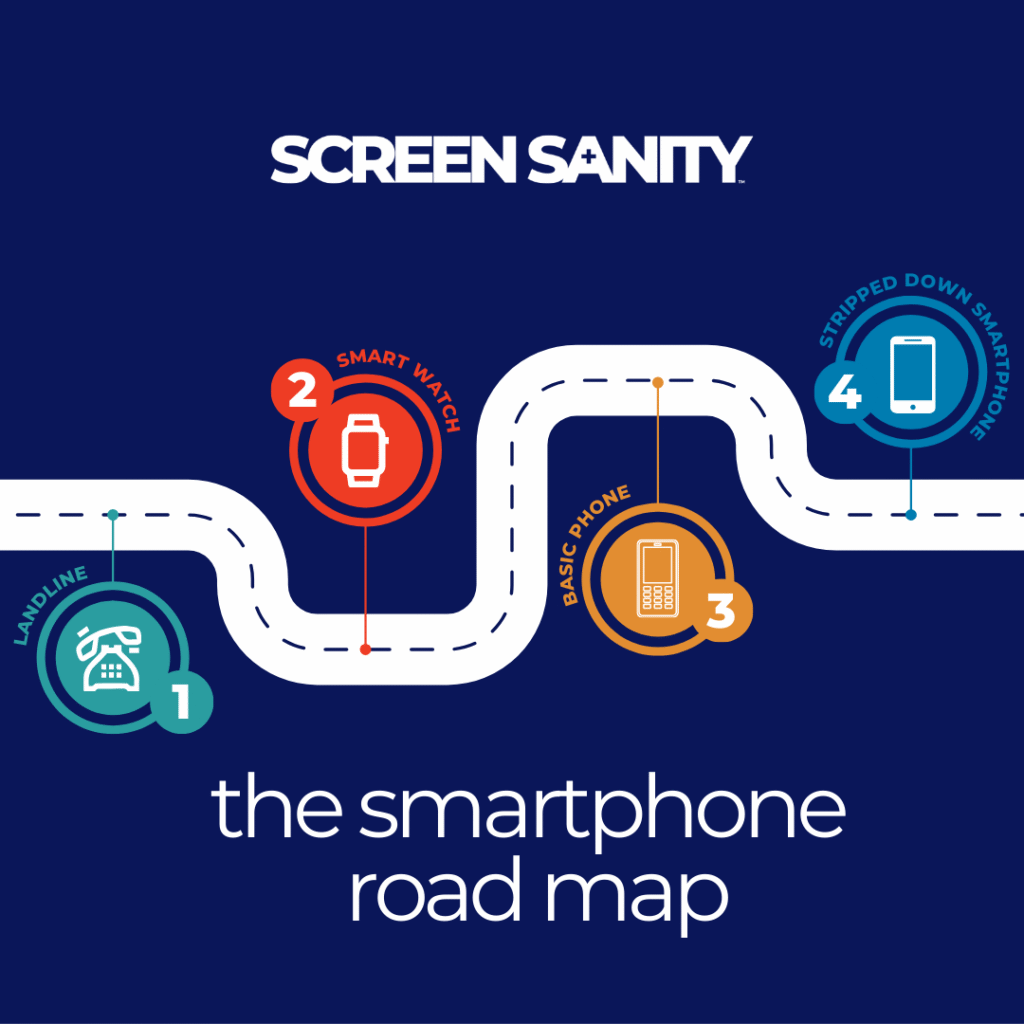
At Screen Sanity, we recommend taking a “driver’s ed” approach to technology. How? Here’s a roadmap to guide the way.
Smartphone Roadmap
Before placing your child behind the “wheel” or screen, it’s helpful to:
Each phase is designed to be a ‘road trip’ – a long period that allows a child to experiment with independence, learn communication skills, navigate a few potholes and learn how to get back on the road without a major accident.
What’s Your Why?
Why? A simple question can provide so much direction. It can be helpful to ask yourself, ‘What is the need I’m hoping to solve with this electronic tool?’ ‘How can I meet that need with the lowest level of risk relative to my child’s maturity and competence?’ Often, we give kids a cell phone because we want to stay connected if soccer practice ends early or for safety concerns. And in the past, a smartphone was one of the only ways to do this. Fortunately, over the past few years, companies have created devices with limited features and less risk that meet connection needs.
Lead With a Landline
Before smartphones and tablets were part of childhood, the landline was how we learned to communicate: calling friends, making plans, talking to grandparents, solving small problems and taking on responsibility. It offered connection without distraction — independence without overload.
If you’re lusting for the good old days, good news. Landlines are back! Connecting over wifi instead of a physical land line, these modern versions provide a gentle, safer step into technology and re-invoke a sense of wonder. When the phone rings, there is excitement and curiosity about who is calling and what they may be calling about. And thanks to products like Tin Can phones that allow parents to add approved contacts, there’s never a concern that a spammer is on the other end.
Consider landlines like a power wheel or toy car. Kids can practice “driving” at home, at a slower speed and in a manner made just for them.
‘Watch’ and Learn
When the time comes that you and your child need to connect when physically apart, a smartwatch can be a helpful resource. With no internet browser or social media, a watch prioritizes communication over scrolling. Its small screen makes it harder to text long messages or mess around, which means more time focusing on the real world and being a kid.
Consider a smartwatch like a bike. Kids can practice “riding/driving” away from home and at higher speeds, plus assume responsibility for safeguarding the tool in their hands.
Go Back to Basics
When it’s finally time for a first cell phone, basic or “first phones” provide fun features – like music or a camera – along with safety guardrails such as:
Consider a basic cell phone like a go-cart. Kids can satisfy their growing need for speed, while helmets, seatbelts and track barriers provide important safety guardrails.
Stripped-down Smartphone
Like cars, smartphones come fully loaded with features. But for teens whose prefrontal cortexes aren’t fully formed, all those bells and whistles serve as distractions. So, start with just a few apps and delete the rest. Just as a new driver transitions from the parking lot to a side street and then main roads, take a gradual approach when adding new apps. And try downloading them yourself! It can help facilitate conversation or highlight hazards your kid might encounter, enabling you to coach them more effectively from the passenger seat.
Consider a stripped-down smartphone like a driver’s ed car. It has full horsepower but is designed to be a place to learn and receive guidance from adults who care.
++++++++++
If you found this blog post helpful, we hope you’ll share it with a friend! Or check out our Parent Night Kit — a video curriculum that includes the smartphone roadmap, plus other digital health principles.